Yucca: The Bold Frontier Spirit for Modern Brands
There’s a certain kind of presence that demands attention without shouting. It’s the quiet confidence of a well-worn leather saddle, the intricate detail on a vintage silver belt buckle, the unmistakable silhouette of a desert horizon at dusk. Capturing that rugged, elegant frontier spirit in a digital asset is no small feat, yet that’s precisely what the Yucca typeface achieves. This isn’t just another decorative font; it’s a carefully crafted piece of typographic history, reimagined for today’s creative landscape.
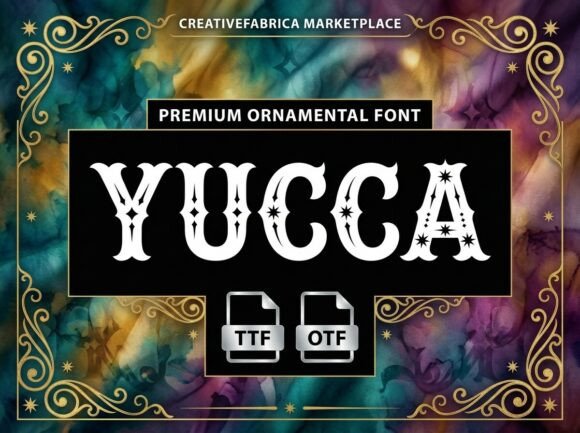
At its core, Yucca is a premium serif font that draws direct inspiration from the bold, ornate lettering of vintage circus posters and the iconic high-noon western signage that defined an era. Its most striking feature is the collection of bold, flared serifs. These aren’t subtle, traditional serifs; they are confident, architectural elements that give each letterform a grounded, majestic stance. What elevates the design further is the intricate detailing. Look closely, and you’ll discover “starlight” cutouts—small, deliberate negative spaces within the strokes—and geometric diamond motifs that adorn the terminals and joints. This decoration is thoughtful, not garish, providing a layer of texture and sophistication that rewards a second glance.
Where the Spirit of Yucca Truly Shines
The personality of Yucca is one of “wild-west-glamour.” It’s a soul that balances raw, untamed energy with a sense of curated elegance. This makes it a powerful tool for specific branding and design projects where you need to evoke heritage, craftsmanship, and a touch of audacious style. Its majestic presence is ideal for projects that aim to tell a story of authenticity and quality.
Consider the world of packaging design and logo design. For an independent distillery, Yucca on a label immediately communicates a handcrafted, small-batch ethos with a bold, unforgettable character. It speaks of tradition and bold flavor profiles. Similarly, for boutique rodeo branding or artisanal leatherwork, the typeface becomes an integral part of the brand identity. It suggests durability, artistry, and a connection to a proud, hardworking heritage. In editorial design, it can be the perfect headline font for a feature on southwestern culture, vintage Americana, or outdoor adventure, setting a powerful and evocative tone before a single word of the body copy is read.
In the digital realm, Yucca excels in creating high-impact moments. As a display font, it’s perfect for vibrant “western-revival” social media headers, website hero sections, or event posters where you need to stop the scroll. It pairs exceptionally well with clean, simple sans serif fonts for body text, creating a dynamic and readable font pairing that balances flair with function. Its geometric details also make it a surprisingly effective choice for modern web design elements that aim for a rustic or artisanal aesthetic, such as banners for craft beer festivals or boutique hotel websites.
Working with a Character-Driven Typeface
Choosing a font like Yucca is a strategic decision that influences far more than just aesthetics. It directly affects visual hierarchy, readability, and audience engagement. Its strong personality makes it a natural for headlines, subheads, and logos—places where you want to establish a dominant, memorable visual voice. Using it for long paragraphs of body copy, however, would likely hinder readability due to its ornate details. The key is to use it purposefully, letting it anchor your design while supporting it with more neutral fonts for extended text.
This deliberate use fosters brand recognition and consistency. When Yucca is integrated thoughtfully across a brand’s touchpoints—from the logo to packaging to digital ads—it creates a cohesive and professional brand identity that feels intentional and trustworthy. It tells your audience that you value detail and character, which can significantly elevate their perception of your brand’s quality and authenticity.
Practical Guidance for Implementation
Before integrating Yucca into your next project, take a moment to evaluate the fit. Does your project’s narrative align with themes of heritage, craftsmanship, rugged elegance, or bold individualism? If the answer is yes, then it’s likely a strong candidate.
- Test Font Pairings: Experiment with pairing Yucca with a straightforward sans serif font like a grotesque or a geometric sans for body text. A simple, elegant script font or handwritten font can also create a beautiful contrast for accent text, but use it sparingly to avoid visual clutter.
- Review Included Styles: A quality premium font like Yucca often comes with multiple weights, stylistic alternates, or ligatures. Explore these options. A lighter weight might offer a different feel, while alternates can help customize a logo for even greater uniqueness.
- Consider the Medium: In print design, ensure the decorative details reproduce clearly at your chosen size. In digital design, test for screen readability at various resolutions, especially on mobile devices.
- Understand Licensing: Always verify the commercial font license for your intended use, whether for a client project, merchandise, or digital products. Respecting licensing is fundamental to professional practice.
Ultimately, Yucca is more than a collection of glyphs; it’s a design asset with a distinct voice. It’s for the designer, marketer, or small business owner who wants to inject their work with a sense of story, place, and uncompromising character. Used wisely, it can transform a standard design into a compelling narrative that resonates deeply with an audience seeking authenticity and bold, modern typography rooted in a storied past.